The Biggest Social Confidence Problem: You Start Watching Yourself Instead of Joining In
Imagine walking into a room where you don't know many people.
Someone who feels socially comfortable might be thinking:
“Who can I talk to?”
But if you lack social confidence, your thoughts might sound more like:
- Where should I stand?
- Do I look awkward?
- What if nobody talks to me?
- What if I say something stupid?
- What if there's an awkward silence?
- What if they don't like me?
- Everyone else looks so confident.
- Should I just look at my phone?
Suddenly, instead of being part of the situation, you're watching yourself inside it.
And the more closely you monitor yourself, the harder being natural can feel.
Social confidence grows when your attention gradually moves away from “How am I coming across?” and towards “Who am I curious about?”

What Does Low Social Confidence Look Like in Teenagers?
Being quiet doesn't automatically mean somebody lacks confidence.
Some teenagers simply prefer smaller groups or fewer friendships.
The more useful question is:
“Is fear or self-doubt stopping me doing social things I actually want to do?”
You may recognise some of these:
Staying Quiet in Groups
You have something to say but wait so long for the perfect moment that the conversation moves on.
Avoiding New People
You would like to meet people but wait for them to approach you first.
Overthinking Conversations
You replay what you said afterwards and worry that you sounded strange.
Using Your Phone as a Shield
Looking busy feels safer than standing there not knowing who to talk to.
Waiting for Friends
You feel comfortable when your usual friends are there but struggle if you have to enter somewhere alone.
Fear of Awkward Silence
You feel responsible for keeping every conversation going perfectly.
Worrying About Being Judged
You focus on whether people approve of you instead of discovering whether you actually like them.
Avoiding Social Opportunities
You sometimes say you don't want to go when the real reason is that you're nervous.
“Why Is Everyone Else Better at Socialising Than Me?”
They probably aren't.
You are seeing their outside while experiencing your inside.
Some of the people who appear relaxed may also be wondering:
- What should I say?
- Do they like me?
- Was that awkward?
- Am I talking too much?
- Do I belong here?
You just can't hear their thoughts.
Confidence can therefore create a strange illusion:
Everyone else's behaviour looks natural.
Your own behaviour feels examined under a microscope.
Being Introverted and Lacking Social Confidence Are Not the Same Thing
This distinction matters.
You do not need to become an extrovert.
You might genuinely prefer:
- One-to-one conversations;
- Smaller friendship groups;
- Quiet environments;
- Time alone;
- Deeper conversations rather than lots of small talk.
None of those things means something needs fixing.
The issue is different when you want to speak, join in, make friends or meet somebody — but fear repeatedly stops you.
Social confidence isn't becoming more outgoing. It's having more choice.
You can choose quiet because you prefer it — rather than because fear made the decision for you.

The Three-Second Rule for Social Confidence
Sometimes your biggest problem isn't knowing what to do.
It's giving yourself enough time to talk yourself out of it.
Try this:
When you notice a small opportunity to say hello, ask a question or join a conversation:
3... 2... 1... act.
Not for dangerous or important decisions.
For tiny everyday acts of social courage.
The longer you stand there debating whether to say hello, the larger “hello” can become.
What Can I Say When I Don't Know What to Say?
A useful conversation formula is:
Notice → Ask → Listen → Follow Up → Share
For example:
Notice: “That was a difficult lesson.”
Ask: “Did you understand the last bit?”
They answer.
Follow up: “Have you got the same teacher next year?”
Then share something about yourself too.
Conversation isn't an interview.
It's a back-and-forth exchange.
What If I'm Scared People Won't Like Me?
This is one of the hardest parts of social confidence.
You may enter conversations trying to achieve one objective:
“Make them like me.”
Try changing it to:
“Let's see whether we get on.”
That tiny change matters.
You are no longer auditioning.
Both people are discovering whether there is a connection.
You don't need everybody to like you. You need enough confidence to give the right people the opportunity to know you.
What If I Say Something Awkward?
You probably will eventually.
Everyone does.
You might:
- Forget somebody's name;
- Mishear a question;
- Make a joke that doesn't land;
- Say something strangely;
- Run out of things to say;
- Talk over someone accidentally.
Social confidence is not performing perfectly.
It's becoming less frightened of normal human awkwardness.
Very often the moment you replay for three hours is something the other person forgot in three minutes.
How to Join a Conversation Without Feeling Awkward
Joining a group can feel harder than starting one-to-one.
Try this:
- Move close enough to show you're interested.
- Listen for a few seconds so you understand the subject.
- Make eye contact or smile.
- Respond to something somebody has just said.
- Ask a relevant question or add a short comment.
You don't need to announce:
“Hello everyone, I am now entering this conversation.”
Most conversations are much less formal than your anxious brain imagines.
Making Friends When You're Shy
If you struggle socially, “just make some friends” is not useful advice.
Break it down.
Your first aim isn't necessarily friendship.
It might simply be familiarity.
Stage 1 — Recognition
You recognise each other and say hello.
Stage 2 — Small Conversation
You talk briefly about something you share.
Stage 3 — Repeated Contact
You start talking regularly.
Stage 4 — Shared Activity
You do something together outside the usual setting.
Stage 5 — Trust
You gradually learn more about each other.
Friendships often develop rather than suddenly happen.
Try the Bravory Social Confidence Ladder
Create five social challenges from easiest to hardest.
Level 1: Smile and say hello to someone.
Level 2: Ask somebody one question.
Level 3: Start a short conversation.
Level 4: Join a group conversation.
Level 5: Attend something new where you don't already know everybody.
Your ladder might look completely different.
That's OK.
The point is to progress rather than jump straight from avoiding social situations to doing the thing you find most intimidating.
Confidence Comes After Evidence
You might currently be waiting for the day when you suddenly think:
“I feel socially confident now.”
But often the order works the other way around.
You say hello even though you're nervous.
It goes OK.
You ask a question another day.
It goes OK.
You start a conversation.
You survive an awkward silence.
You attend somewhere new.
Eventually your brain starts collecting evidence:
“Maybe I can do this.”
That is confidence developing.
The Bravory BRAVE Method and Social Confidence
Social confidence fits directly into the Bravory BRAVE Method.
B — Belief
Challenge the belief that you are boring, awkward or “bad with people”.
R — Resilience
Learn that an awkward conversation or somebody not connecting with you isn't a disaster.
A — Action
Practise small social actions instead of waiting until you feel completely ready.
V — Voice
Ask questions, express opinions and allow other people to hear what you think.
E — Evidence
Notice every conversation, introduction and social situation you handled.
Take the Bravory Social Confidence Check
If you're not sure what is making social situations difficult, a confidence check can help you reflect on where you currently feel comfortable and where you tend to hold back.
The Bravory Teen Confidence Scorecard explores areas including:
- Friendships and social courage
- Communication and speaking up
- Self-belief
- Resilience
- And independence
The scorecard is designed as a reflection tool rather than a medical or mental-health diagnosis.
How Parents Can Help a Teenager Become More Socially Confident
Watching a teenager struggle socially can be difficult.
You may want to solve it for them.
But saying:
“Just go and talk to someone.”
can make something that already feels difficult sound ridiculously simple.
Instead, try helping your teenager break social confidence into smaller actions.
Useful questions include:
- “Which bit feels hardest?”
- “Would it be easier to speak to one person rather than a whole group?”
- “What could you ask them?”
- “What's the smallest step you could take?”
- “What went better than you expected?”
- “What would you try differently next time?”
Avoid labelling your teenager as:
“the shy one”.
A temporary behaviour can easily become an identity.
Try:
“You find some social situations difficult at the moment.”
“At the moment” leaves room for growth.
Help Them Talk Without Turning It Into an Interrogation
Sometimes parents know something isn't quite right socially but asking:
“What's wrong?”
gets:
“Nothing.”
Bravory's Parent Conversation Kit is designed to help parents and guardians ask better questions and create more useful conversations.
Explore the Parent Conversation KitA good conversation can often help a young person feel heard before you start working out what to do next. :contentReference[oaicite:1]{index=1}
Social Confidence for School, College and Work
Social confidence is not just about making friends.
The same skills become useful when you need to:
- Speak in class
- Ask a teacher for help
- Attend college or university
- Start an apprenticeship
- Go to an interview
- Start a part-time job
- Speak to customers
- Work in a team
- Meet new colleagues
- Ask questions when you are unsure.
Learning to connect with people now is a life skill, not merely a teenage social skill.
From Socially Unsure to Socially Braver: The 6-Week Programme
Reading tips can give you ideas.
But social confidence is something you build through practice.
The Bravory 6-Week Teen Confidence Mastery Programme helps teenagers and young adults work on:
- Speaking up
- Meeting new people
- Communication
- Self-belief
- Fear of judgement
- Overthinking
- Decision-making
- Resilience
- And taking small brave actions
Bravory's existing programme specifically includes speaking up, meeting people, communication and real-world confidence practice. :contentReference[oaicite:2]{index=2}
Explore the 6-Week Teen Confidence Programme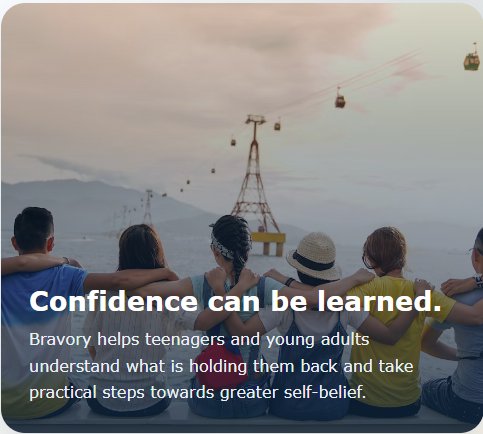
Explore More Bravory Support
Teen Confidence Scorecard
Explore friendships and social courage, communication, self-belief, resilience and independence.
Take the ScorecardFear of Judgement
If worrying about what people think is stopping you socially, explore practical ways to reduce its influence.
Read the GuideTeen Overthinking
Learn how to stop replaying conversations and second-guessing everything you say.
Explore Overthinking HelpConfidence Building for Teens
Practical steps parents and young people can use to build greater self-belief.
Read the Confidence GuideParent Conversation Kit
Help your teenager open up and talk about what is going on without turning every conversation into a lecture.
Explore the Kit6-Week Confidence Programme
Turn confidence-building ideas into structured practical action.
Explore the ProgrammeWhen Social Difficulty May Need Additional Support
Feeling shy, nervous or uncomfortable in some social situations can be normal.
Bravory focuses on confidence, communication, resilience and personal development.
It is not therapy or mental-health treatment.
If fear of social situations is causing severe distress, persistent avoidance, significant problems attending school or college, panic, depression, self-harm concerns or a major impact on everyday life, speak with an appropriate qualified professional.
That could include a GP, counsellor, school pastoral or safeguarding team or specialist mental-health service.
Frequently Asked Questions About Social Confidence for Teenagers
How can a teenager become more socially confident?
Start with small repeated social actions such as saying hello first, asking one question, speaking briefly in a group or joining an activity. Confidence develops as teenagers collect evidence that they can manage social situations successfully.
How can I help my teenager become more socially confident?
Avoid forcing large social situations immediately. Help them identify the specific part they find difficult, break it into smaller steps, encourage practice and recognise courage and progress rather than expecting instant confidence.
Is being shy the same as lacking confidence?
No. A teenager may naturally prefer quieter situations and smaller groups. Social confidence becomes an issue when fear or self-doubt repeatedly stops them doing social things they genuinely want to do.
How can a shy teenager make friends?
Focus first on repeated contact rather than trying to make an instant close friend. Shared activities, clubs, classes, sport, volunteering and hobbies can make conversation easier because people already have something in common.
What can teenagers talk about when they don't know what to say?
Start with what is happening around you. Ask simple questions, listen carefully and use the other person's answer to ask a follow-up question. You don't need an impressive opening line to start a useful conversation.
Can social confidence be learned?
Social confidence can be developed through practice. Small repeated experiences of starting conversations, speaking up, joining groups and managing occasional awkward moments help create greater self-belief over time.
Does Bravory help with social confidence?
Bravory helps teenagers and young adults develop confidence, communication, speaking up, resilience, decision-making and practical courage. The 6-Week Teen Confidence Mastery Programme includes real-world confidence practice rather than simply advice.
You Do Not Need to Become the Most Confident Person in the Room
You don't need to walk into every room and own it.
You don't need to talk constantly.
You don't need 500 friends.
And you definitely don't need to pretend to be somebody else.
Social confidence can be much quieter than that.
It can look like:
- Saying hello first
- Asking a question
- Walking into somewhere alone
- Joining a conversation
- Expressing your opinion
- Allowing an awkward moment to pass
- Letting somebody get to know the real you
You don't need to become more impressive. You need to become more comfortable letting people meet you.
Your Social Confidence Challenge
Choose one social action that feels slightly uncomfortable — but possible.
Not terrifying.
Just slightly outside your normal comfort zone.
Then do it this week.
Say hello. Ask the question. Join in. Send the message. Introduce yourself.
Then ask:
“What did I learn about what I can handle?”
That's your evidence.
Explore the 6-Week Teen Confidence Programme Take the Teen Confidence Scorecard