How to Help a Teenager with Low Confidence
How to Help a Teenager with Low Confidence - Perhaps the hardest part is not knowing what to do.
- You can see that your teenager has ability
- You can see that they are capable
- You can probably see things in them that they cannot yet see in themselves
But somewhere between knowing what they could do and actually having the confidence to do it, something gets in the way.
- They overthink
- They hesitate
- They worry about what other people might think
- They avoid speaking up
- They decide not to try because failing would feel worse than not trying at all
- They compare themselves with people who seem more confident
- They struggle to make decisions
- They tell you that everything is fine, while you quietly wonder whether they really believe in themselves
And that is one of the biggest concerns parents and guardians have when it comes to teenage confidence:
How do I help my teenager become more confident without constantly pushing them, nagging them or making them feel as though there is something wrong with them?
That question sits at the heart of Bravory.
Because confidence is rarely created by telling a teenager to “just be more confident”.
If it were that easy, they would already be doing it.
Confidence develops when a young person begins to understand themselves, challenge the stories they have been telling themselves, take small actions despite feeling uncomfortable and then recognise the evidence that they are more capable than they previously believed.
That is what Bravory is designed to help them do.
How to Help a Teenager with Low Confidence
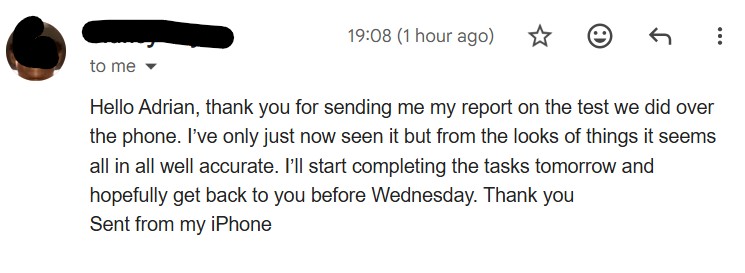
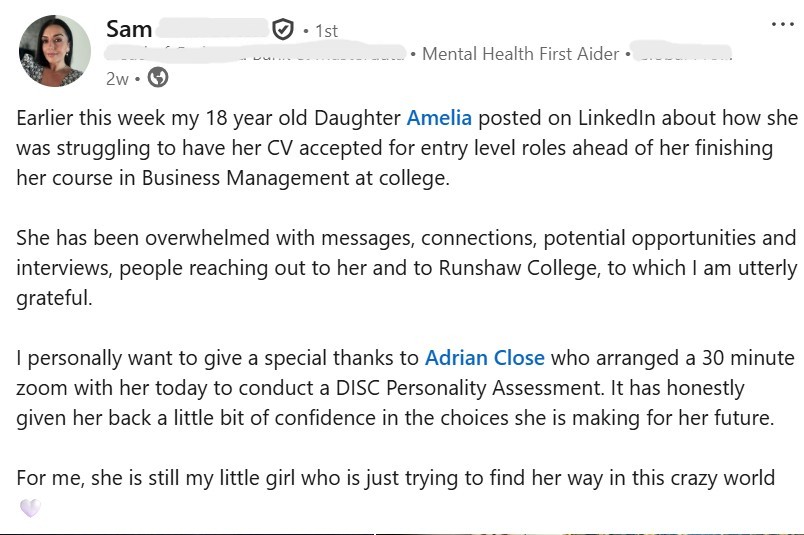 Feedback received from a concerned parent via LinkedIn
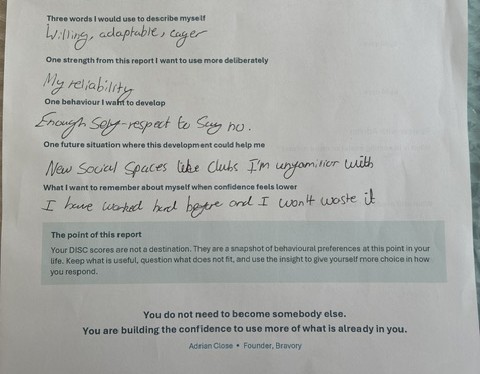
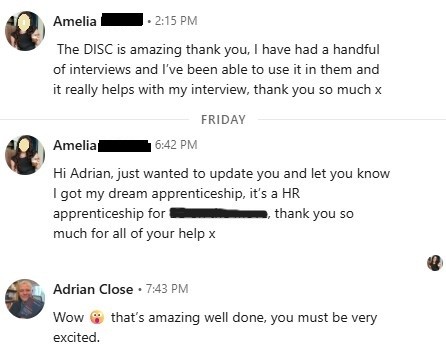 I helped Amelia with a DISC profile and it gave her the confidence needed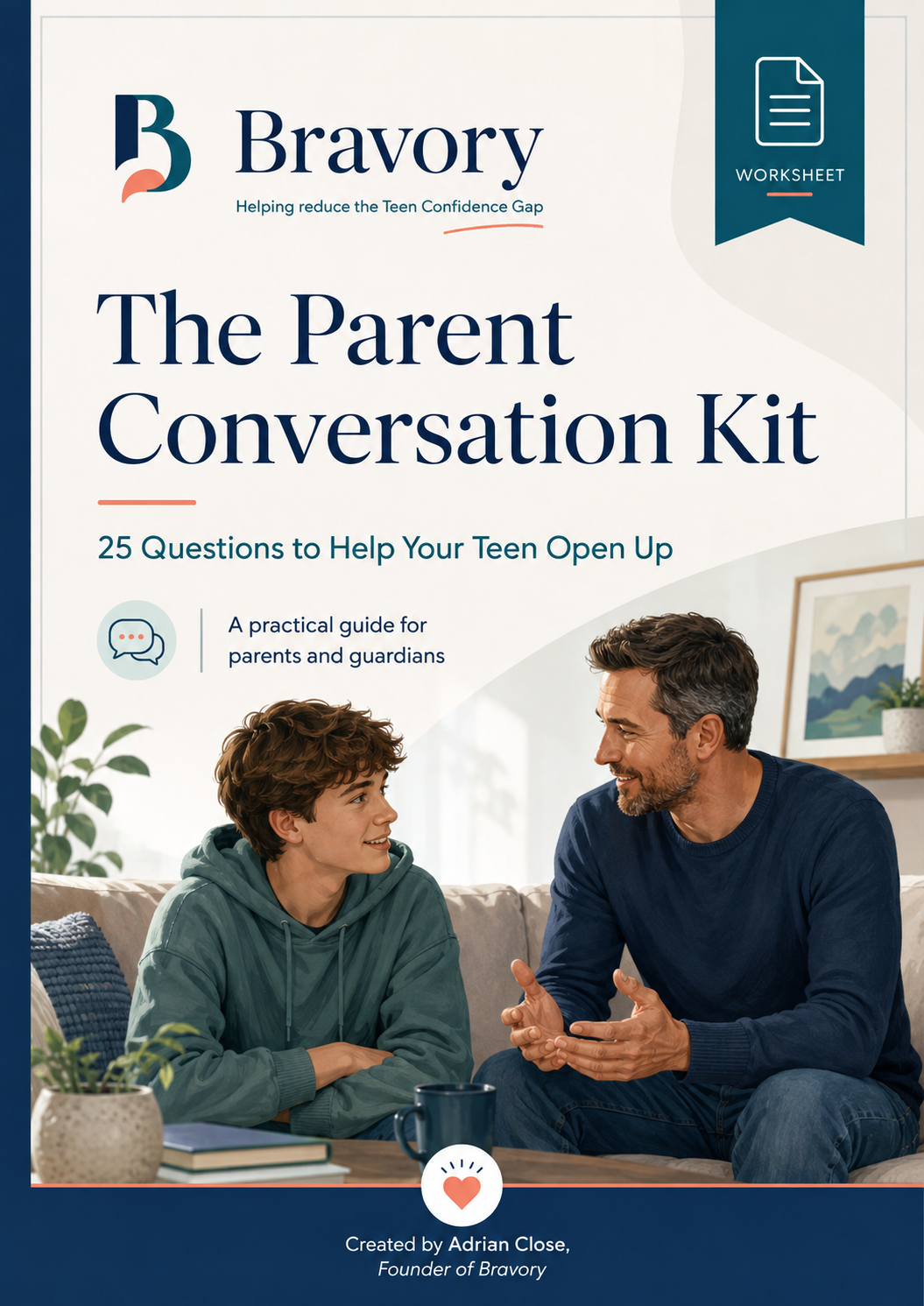
Your Teenager Probably Doesn't Need Fixing
One of the most important things a parent can understand is that a teenager who lacks confidence is not necessarily lacking ability.
Often, the opposite is true.
Some highly capable teenagers are also some of the biggest overthinkers.
- They can see every possible outcome
- They notice what might go wrong
- They think about what people might say
- They replay conversations
- They compare themselves to other people
- They wait until they feel completely ready before doing something new.
And because completely ready rarely arrives, they stay where they are.
From the outside, that can look like laziness.
- It can look like a lack of motivation
- It can look like stubbornness
Sometimes it looks as though they simply cannot be bothered.
But underneath it may be something much simpler:
“What if I get it wrong?”
“What if everyone notices?”
“What if I embarrass myself?”
“What if I am not good enough?”
“What if I fail?”
That is why helping a teenager build confidence is not about turning them into the loudest person in the room.
- It is not about changing their personality.
- It is not about making an introvert behave like an extrovert.
And it is certainly not about creating a teenager who thinks they are brilliant at everything.
Real confidence is quieter than that.
Real confidence is being able to think:
“I don't know exactly how this will go, but I am willing to have a go.”
That is a very different kind of confidence.
And it can be learned.
How to Help a Teenager with Low Confidence
Why Does My Teenager Have No Confidence?
Parents often search questions such as:
- Why does my teenager have no confidence?
- How do I help a teenager with low confidence?
- How do I build my teenager's self-esteem?
- Why does my teenager overthink everything?
- Why is my teenager afraid of what other people think?
- How do I help my teenager become more independent?
There is rarely one single answer.
Teenage confidence can be affected by friendships, school, social media, exam pressure, comparison, fear of judgement, previous setbacks and the pressure young people put on themselves.
One teenager may struggle socially.
Another might be confident with friends but terrified of answering a question in class.
Another might happily stand on a sports field in front of hundreds of people but avoid making a telephone call.
Another might be academically capable but unable to make a decision without checking with a parent five times.
Confidence is not one thing.
It is a collection of experiences.
And every time a young person does something they thought they could not do, they collect another little piece of evidence.
That evidence matters.
Because confidence is built through evidence.


How to Help a Teenager with Low Confidence


The Confidence Trap Many Teenagers Fall Into
A teenager often thinks:
“When I feel confident, I'll do it.”
But confidence normally works the other way around.
You do something.
You discover you can cope.
Then you become a little more confident.
Imagine a young person who is nervous about speaking in front of the class.
Waiting until they suddenly feel confident enough to volunteer may mean they never volunteer.
But perhaps they begin by asking one question.
- Then they contribute one idea.
- Then they speak for thirty seconds.
- Then a minute.
Nothing dramatic happens.
Nobody laughs.
The world keeps turning.
And slowly their brain begins to collect evidence:
“Actually, I can do this.”
That is how confidence grows.
- Small action
- Experience
- Reflection
- Evidence
Then another small action.
How to Help a Teenager with Low Confidence
This Is Why Bravory Was Created
Bravory is built around a simple belief:
Young people do not need somebody constantly telling them to be more confident. They need the tools to build confidence for themselves.
The Bravory 6-Week Confidence Program has been designed as a self-study confidence programme for teenagers and young adults.
That matters.
Because independence is part of confidence.
Instead of a parent having to sit beside them, supervise every exercise or repeatedly remind them what they should be doing, the young person can begin taking ownership of their own development.
- They work through the program
- They reflect
- They complete activities
- They consider situations in their own lives
- They decide what small action they are going to take next
- They begin creating their own evidence
For many young people, that independence is powerful.
It changes the conversation from:
“Mum or Dad thinks I need more confidence.”
to:
“This is something I am choosing to work on for myself.”
That is a very different starting point.
How to Help a Teenager with Low Confidence



The BRAVE Method
The Bravory program is built around the BRAVE Method:
Belief
Learning to recognise the stories you tell yourself.
“I can't.”
“I'll probably get it wrong.”
“Everyone else is better than me.”
“They'll judge me.”
The aim is not to replace every thought with unrealistic positive thinking.
It is to learn to question whether every thought deserves to be believed.
Resilience
Things will go wrong.
People will disagree with us.
We will make mistakes.
We will occasionally embarrass ourselves.
Confidence does not come from avoiding those moments.
It develops when we realise we can handle them.
Action
Thinking about becoming confident does not create confidence.
Action does.
Sometimes very small action.
- Sending the message
- Asking the question
- Introducing yourself
- Making the decision
- Trying the activity
- Speaking first
- Applying for something
- Saying yes
Occasionally saying no.
Voice
Confidence includes being able to communicate.
- To explain what you think
- To ask for help
- To disagree appropriately
- To have a difficult conversation
- To say what you need
- To be heard without having to shout
Evidence
This may be the most important part.
Young people often remember what went badly and quickly forget what went well.
Bravory encourages them to notice their own evidence.
- The conversation they handled
- The question they asked
- The decision they made
- The uncomfortable thing they did anyway
- That evidence becomes the foundation for future confidence
How to Help a Teenager with Low Confidence
What If My Teenager Needs More Support?
The Bravory 6-Week Confidence Program can be completed independently.
That is one of its greatest strengths.
But independence does not mean being left alone.
Some young people benefit from additional support, encouragement or accountability.
That is where Adrian Close can help.
Adrian is the founder of Bravory and the creator of the Bravory confidence program.
He is also a multi-award-winning training consultant who has spent much of his working life developing people.
But his involvement with teenagers and young adults began long before Bravory existed.
How to Help a Teenager with Low Confidence
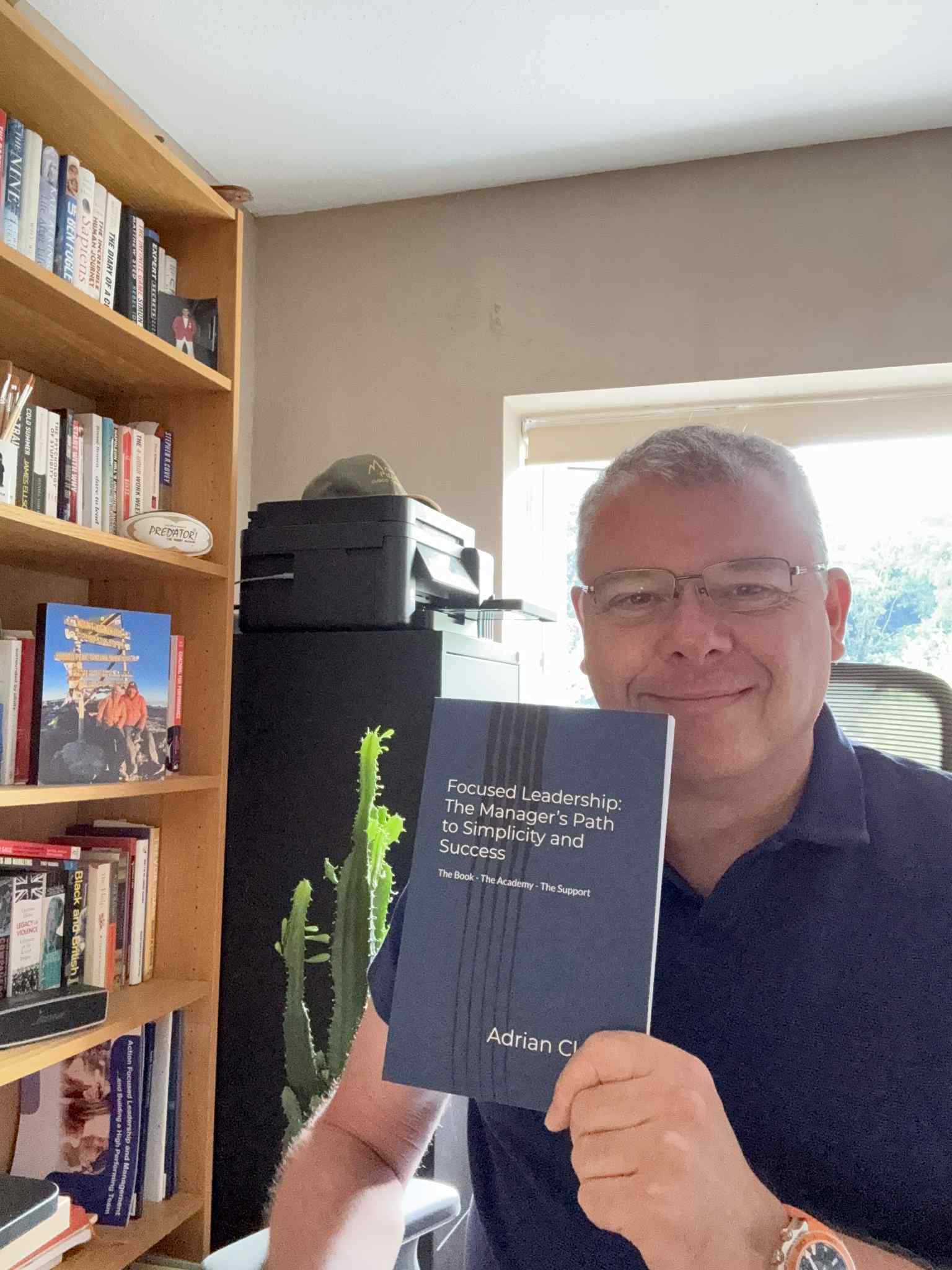 Adrian is the founder of Bravory and the creator of the Bravory confidence program
 Adrian at the top of Kilimanjaro
Meet Adrian Close
Years ago, Adrian travelled to California through the Camp America programme.
It was there that he began working closely with young people, using sport, activity and conversation as ways of developing confidence and encouraging young adults to try things they may previously have avoided.
Those early experiences shaped an idea that has stayed with him throughout his career:
People often discover what they are capable of when somebody creates the right environment for them to try.
After returning to the UK, Adrian worked within three inner-city areas of Nottingham.
Once again, sport became the medium.
But the real subject was often confidence.
- Communication
- Teamwork
- Behaviour
- Decision making
- Belonging
The ability to keep going when something became difficult.
That experience led into a career where developing people became a constant theme.
Over the years Adrian has interviewed, employed, trained, managed and developed thousands of teenagers and young adults through businesses he has managed and owned.
- He has seen young people arrive nervous on their first day of work and grow into capable employees
- He has watched people who barely spoke during their first few weeks eventually become confident contributors
- He has seen young adults make mistakes, recover from them, develop resilience and realise they were much more capable than they originally believed
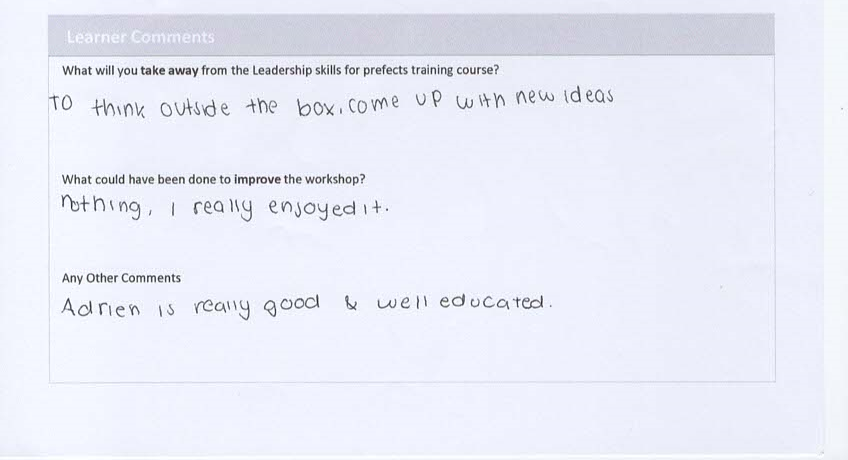
- He has also worked with young people in schools, including delivering First Aid at Work training to 16- and 17-year-olds and delivering leadership skills training to school prefects across the UK
And away from the classroom and workplace, Adrian has supervised young people undertaking Bronze, Silver and Gold Duke of Edinburgh expeditions.
Anyone who has been involved with an expedition like that knows something important happens when young people have to navigate, make decisions, work as a team, deal with discomfort and keep going when plans change.
It is confidence development in the real world.
Not confidence as a motivational slogan.
Confidence through doing.
- Through experience
- Through responsibility
Through discovering:
“I dealt with that.”
Those experiences helped shape Bravory.
How to Help a Teenager with Low Confidence
A Safe, Practical Approach to Teenage Confidence
Bravory is not about telling young people that they should become somebody else.
It is not about pushing a teenager into situations they are not ready for.
And it is not therapy.
Bravory is a confidence and personal development programme designed to help teenagers and young adults develop practical skills around self-belief, resilience, communication, decision making and independence.
The tone matters.
There is no judgement.
No expectation that somebody must suddenly become confident overnight.
The question is simply:
- What could you do next that is slightly braver than what you did yesterday?
That might be speaking to somebody.
Making one decision without checking with somebody else.
- Joining something.
- Applying for something.
- Starting a conversation.
- Putting their hand up.
- Going somewhere independently.
- Saying what they actually think.
Trying something despite not knowing whether they will be good at it.
Confidence grows through moments like those.

How to Help a Teenager with Low Confidence


Signs Your Teenager May Be Struggling With Confidence
Parents often ask how to tell whether their teenager lacks confidence.
There is no single checklist that applies to everybody, but you may notice patterns.
Your teenager might avoid trying something new because they are worried they will not be good enough.
- They might compare themselves constantly with other people.
- They may seek reassurance before making relatively small decisions.
- They may avoid conversations.
They might say things such as:
“I'm not good enough.”
“I can't do that.”
“Everyone else is better than me.”
“What if they think I'm weird?”
“I'll probably get it wrong.”
- They might turn down opportunities they actually want
- They may overthink what to wear, what to say, what message to send or whether somebody likes them
- They may find criticism particularly difficult
- They may avoid being seen trying
Sometimes they even avoid something because succeeding would mean being noticed.
For parents, this can be frustrating.
You want to say:
“Just do it. You'll be fine.”
But the teenager is standing on the other side of the same situation seeing something entirely different.
Bravory tries to help bridge that gap.
How to Help a Teenager with Low Confidence
What Parents Can Do
The instinct is often to solve the problem.
That is understandable.
Parents have spent years protecting their children.
But as teenagers become young adults, confidence requires increasingly giving them opportunities to think, choose, act and sometimes get things wrong.
Instead of immediately answering:
- “What should I do?”
try:
- “What do you think you should do?”
Instead of:
- “Don't worry, it'll be fine.”
try:
- “What is the part you're most worried about?”
Instead of:
- “I'll do it for you.”
perhaps:
- “Would you like me to help you think through how you could do it?”
There is a subtle but significant difference.
The goal is not simply to solve today's problem.
It is to help create a young adult who increasingly believes:
- “I can work things out.”
How to Help a Teenager with Low Confidence
The Bravory Movement
Bravory is bigger than a six-week program.
The ambition is to start a movement around a different understanding of teenage confidence.
Confidence is not being fearless.
- It is not being loud
- It is not being the centre of attention
And it is not pretending everything is easy.
Bravory is about doing things that matter even when part of you feels uncertain.
We want teenagers and young adults to understand that discomfort does not automatically mean stop.
- That getting something wrong does not mean failure
- That somebody else's opinion does not have to become their identity
- That overthinking does not have to make every decision for them
- That confidence is something they can practise
And that becoming more independent is not about suddenly having all the answers.
It is about increasingly trusting yourself to work them out.
Imagine the difference that could make.
A generation of young people who are willing to speak.
- To listen
- To make decisions
- To ask for help
- To make mistakes
- To recover
- To think for themselves
- To take opportunities
And to have the courage to become more of who they already are.
That is Bravory.
How to Help a Teenager with Low Confidence
Could the Bravory 6-Week Program Help Your Teenager?
If you have been searching for:
- How to help my teenager become more confident
- Confidence building for teenagers
- Teen confidence coaching UK
- How to help a teenager with low self-esteem
- How to help an overthinking teenager
- How to help a shy teenager become more confident
- Social confidence for teenagers
- Teen resilience training
- Communication skills for teenagers
- How to help my teenager become more independent
- Or an online confidence course for teenagers in the UK, the Bravory 6-Week Confidence Program has been designed around many of those exact challenges.
Your teenager can work through the program independently.
- They can develop at their own pace
- They can reflect privately
- They can begin trying small changes in the real world
And where additional support would be useful, options are available for guidance and coaching directly from Adrian Close, the founder and creator of Bravory.
Sometimes a teenager does not need somebody to give them confidence.
They need somebody to show them how to build it for themselves.
How to Help a Teenager with Low Confidence
Start Small - How to Help a Teenager with Low Confidence
If there is one idea to take away from this page, make it this:
Confidence rarely arrives before the action.
It normally arrives because of it.
So do not ask:
- “How can we make you completely confident?”
Ask:
- “What is one small thing you could do this week that would prove to you that you are more capable than you think?”
That is where confidence starts.
- One conversation
- One decision
- One uncomfortable moment
- One piece of evidence
- Then another
- And another
Until eventually the young person who once thought:
- “I can't do that.”
starts saying:
- “I haven't done it yet.”
That one word changes everything.
Yet.
Welcome to Bravory.
Build belief. Develop resilience. Take action. Find your voice. Collect the evidence.
And become a little braver every day.
How to Help a Teenager with Low Confidence
Some Organisations Who Have Benefitted From Our Training:

















Thanks for visiting our How to Help a Teenager with Low Confidence page, here is a link to our Homepage
How to Help a Teenager with Low Confidence, worried your teenager lacks confidence or holds themselves back? Discover practical ways to build self-belief, resilience, communication and independence, and learn how Bravory's 6-week teen confidence programme can help
How to Help a Teenager with Low Confidence
Why Confidence Matters at Every Age
Confidence isn’t just for teenagers - it’s a lifelong skill. But the teenage years are where the journey often begins. It’s a time of discovering who we are, making choices that shape the future, and learning how to navigate life’s challenges.
Whether you’re a teen finding your identity or an adult facing new goals, responsibilities, or transitions, confidence is the foundation that helps us thrive. It shapes the way we:
- Handle pressure and uncertainty
- Build healthy, supportive relationships
- Make decisions with courage
- Recover and grow after setbacks
In a world filled with comparison and constant change, confidence acts like an inner anchor - keeping us grounded, resilient, and true to ourselves.
Without confidence, potential stays hidden.
With it, possibilities open up.
Confidence allows us to believe:
🌟 “I can.”
🌟 “I matter.”
🌟 “I’ve got this.”
And here’s the truth: confidence can be built at any age.
For teenagers, developing self-belief now creates strong foundations for life.
For adults, confidence keeps evolving - helping us grow, adapt, and lead ourselves well no matter what stage we’re in.
Confidence isn’t about being the loudest voice in the room. It’s about knowing your worth and having the courage to show up as your authentic self.
The earlier we nurture it - and the more we practise it - the stronger we stand, at every stage of life.
 My wife and I at the highest point of the Atlas Mountains in north Africa - Mt Toubkal