When Confidence Starts Holding You Back
Low confidence does not always look like someone hiding in the corner. You might be confident with friends but struggle to speak to adults. You might be excellent at school or college but constantly worry that you are going to get something wrong. You might look confident on the outside while questioning almost everything you do on the inside.
You may recognise yourself in some of these:
- I overthink decisions that other people seem to make easily.
- I worry too much about what people think of me.
- I avoid speaking up even when I know the answer.
- I compare myself with other people.
- I find criticism or setbacks difficult.
- I want to try new things but talk myself out of them.
- I say yes because saying no feels uncomfortable.
- I rely on other people to reassure me.
- I am frightened of looking stupid or getting something wrong.
- I know I could be more confident, but I don't know where to begin.
The Biggest Confidence Problem Isn't Usually Ability
One of the frustrating things about lacking confidence is that you may already know you are capable. The problem is not always whether you can do something. The problem is whether you trust yourself enough to try.
Confidence isn't waiting until you stop feeling nervous. It is learning that you can take action even when part of you feels unsure.
That means confidence can be worked on. It is not something that some people are born with and everybody else has to live without.
Every time you speak up, make a decision, try something new, recover from something going wrong or do something that feels slightly uncomfortable, you create evidence that says: “I can handle this.”
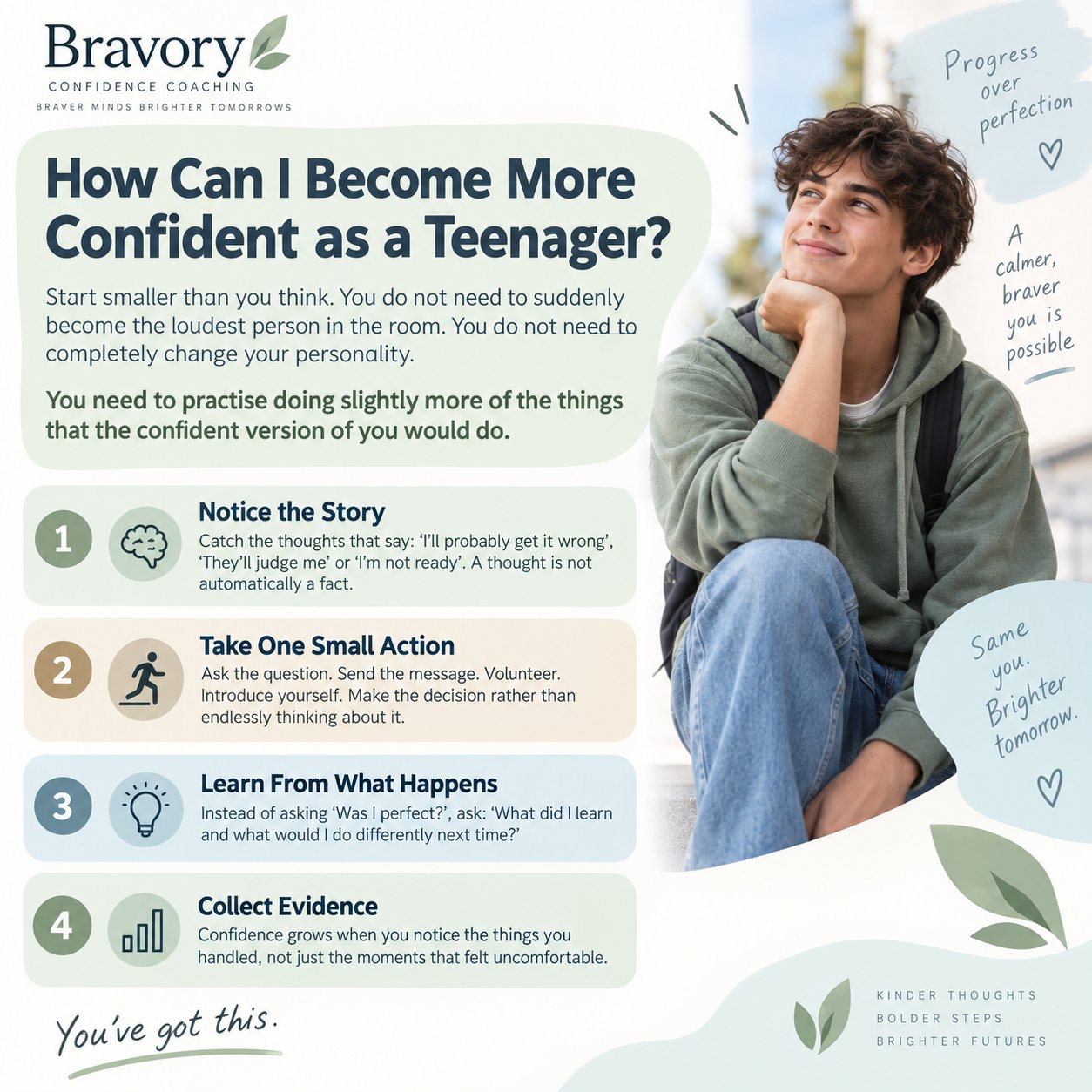
How Can I Become More Confident as a Teenager?
Start smaller than you think. You do not need to suddenly become the loudest person in the room. You do not need to completely change your personality.
You need to practise doing slightly more of the things that the confident version of you would do.
1. Notice the Story
Catch the thoughts that say: “I'll probably get it wrong”, “They'll judge me” or “I'm not ready”. A thought is not automatically a fact.
2. Take One Small Action
Ask the question. Send the message. Volunteer. Introduce yourself. Make the decision rather than endlessly thinking about it.
3. Learn From What Happens
Instead of asking “Was I perfect?”, ask: “What did I learn and what would I do differently next time?”
4. Collect Evidence
Confidence grows when you notice the things you handled, not just the moments that felt uncomfortable.

What Is Bravory?
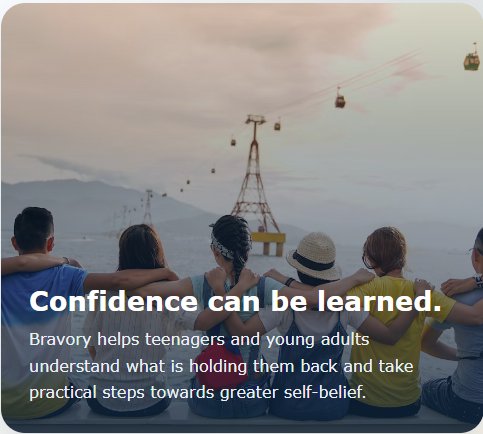
Bravory helps teenagers and young adults build practical confidence for real life.
This isn't about pretending to be confident. It isn't about telling you to “just believe in yourself”. And it isn't about turning a quiet person into a loud person.
It is about helping you understand what is holding you back and then giving you practical ways to build greater self-belief, resilience, communication skills, social confidence, independence and courage to take action.
The BRAVE Method
Bravory develops confidence through five areas:
- B – Belief: learning to recognise what you are capable of.
- R – Resilience: handling setbacks, criticism and things going wrong.
- A – Action: doing things rather than endlessly waiting to feel ready.
- V – Voice: communicating, speaking up and expressing what you think.
- E – Evidence: noticing your progress and creating proof that you can cope.
The 6-Week Teen Confidence Programme
If you are searching for confidence coaching for teenagers in the UK, the Bravory 6-Week Teen Confidence Programme gives you a structured way to actually work on confidence, rather than simply reading about it.
Across the programme you begin to understand your confidence, notice the thinking that holds you back and practise taking positive action in everyday situations.
The aim isn't for you to finish six weeks saying, “I know more about confidence.”
The aim is for you to be able to say:
- I speak up more than I used to.
- I overthink less.
- I recover more quickly when things go wrong.
- I am more comfortable making decisions.
- I worry less about other people's opinions.
- I am willing to try things even when I feel nervous.
- I trust myself more.
See How the 6-Week Programme Works
“How Can I Help My Teenager Become More Confident?”
If you are reading this as a parent or guardian, perhaps you can see ability in your teenager that they cannot yet see in themselves.
You might watch them avoid opportunities, worry about what other people think, overthink decisions or become frustrated with themselves when something goes wrong.
Your instinct may be to reassure them: “You can do it.”
That encouragement matters. But lasting confidence normally develops when the young person begins creating their own evidence that they can deal with situations themselves.
Bravory therefore focuses on helping young people take age-appropriate steps for themselves, rather than becoming dependent on constant reassurance.
Teen Confidence Is Bigger Than Just Speaking Up
Confidence affects many areas of teenage and young adult life. That is why Bravory explores more than public speaking or social confidence.
Self-Belief
Do I believe I am capable, even when something feels difficult?
Communication
Can I explain what I think, ask questions and speak up when it matters?
Resilience
What happens to me when things go wrong?
Social Confidence
Can I be myself around other people without constantly worrying about their opinion?
Independence
Can I make decisions and take responsibility without always needing someone else to lead?
Difficult Conversations
Can I say what needs to be said respectfully instead of avoiding it?
Try the Bravory Confidence Tools
You don't have to begin by signing up for anything. You can start by becoming curious about your own confidence.
Explore the Bravory confidence tools and scorecards to discover what might currently be holding you back.
- Teen Confidence Scorecard
- What's Holding Me Back?
- Do I Overthink Everything?
- Am I Too Worried About What People Think?
- How Independent Am I?
- Do I Avoid Difficult Conversations?
- Bravory Parent & Guardian Hub
- Bravory Teen & Young Adult Hub
Note: change any of the URLs above to your actual Bravory page addresses before publishing.
What If I Don't Feel Ready?
This is one of the most important things to understand about confidence:
You don't always become confident and then take action. Very often, you take action first — and confidence grows afterwards.
You don't need to feel completely ready.
You just need to decide what one small step looks like.
That might be speaking once in a lesson. Making one decision without asking everybody else what they think. Starting a conversation. Applying for something. Trying something you might not be brilliant at immediately. Or saying what you really think instead of what you think everybody wants to hear.
Small acts of courage become evidence. Evidence builds belief. And belief makes the next action easier.
Confidence for Young Adults Too
Bravory isn't only about teenage confidence. The same issues can follow young people into university, apprenticeships, work and early adulthood.
You may be technically an adult but still find yourself thinking:
- Why does everybody else seem more confident than me?
- Why can't I make decisions without overthinking?
- Why do I constantly worry about saying the wrong thing?
- Why do I need reassurance before I trust my own judgement?
- Why am I frightened of getting things wrong?
Learning these skills now can help you become more confident not just socially, but in education, relationships, work and independent adult life.
Frequently Asked Questions About Teen Confidence Coaching
Can confidence really be learned?
Confidence can be developed through experience, reflection and repeated action. The objective is not to eliminate nervousness; it is to become increasingly able to act despite it.
What age is Bravory for?
Bravory is designed for teenagers and young adults who want to develop practical confidence, self-belief, resilience, communication and independence.
Is Bravory therapy?
No. Bravory is a confidence and personal development programme rather than therapy or mental-health treatment. Where someone requires clinical or specialist mental-health support, the appropriate qualified professional should be involved.
How can I help my teenager become more confident?
Encourage small opportunities for independent action. Ask questions rather than immediately solving every problem. Notice effort and progress, not simply results. Help them reflect on what they handled successfully. And give them opportunities to make age-appropriate decisions for themselves.
What is the best confidence course for teenagers in the UK?
The right programme depends on the individual. Look for something that goes beyond motivation and gives the young person practical activities, reflection and opportunities to apply what they learn in everyday life. That is the approach behind Bravory's 6-Week Teen Confidence Programme.
You Don't Need to Become a Different Person
Confidence isn't about becoming somebody else.
It is about becoming more willing to be you without constantly asking yourself whether you are good enough.
You may still get nervous. You may still overthink occasionally. Some things will still feel uncomfortable.
But imagine knowing that nervousness doesn't have to make your decisions for you.
Imagine speaking when you would once have stayed silent. Trying when you would once have avoided. Making a decision without asking five other people first. Recovering when something goes wrong.
That's what building confidence looks like.
Your Next Step
You don't need to change everything today.
Start by asking yourself:
“What would I do this week if I trusted myself just 10% more?”
Then take one small step.
And if you would like some structure, encouragement and practical tools to help you keep moving, Bravory can help.
Explore Bravory's 6-Week Confidence Programme Take the Teen Confidence Scorecard